
 Speed of Service
 Easy Systems
 Product Designers & Developers
 Car Park Protection



 Industrial Safety



 Pedestrian Barriers


 Matting, Ramps & Tactiles
 Signage & Safety


 Urban Furniture
Bollards, Barriers, or Pedestrian Rails? What to Use and Where
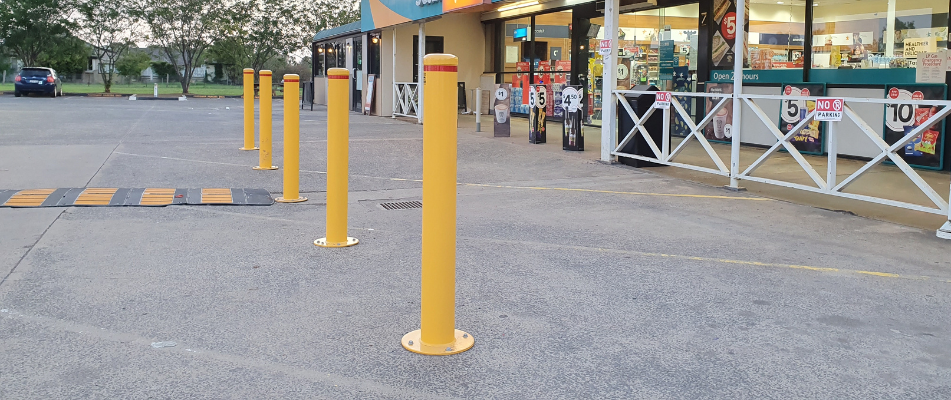


When planning public spaces, car parks, or industrial sites, selecting the right physical safety solutions is essential. Bollards, barriers, and pedestrian rails each serve a specific purpose, but knowing where and when to use each one is key to getting your safety and access outcomes right.
Here’s a breakdown of what each product is, what it’s designed to do, and the best locations to use it.
Bollards: Compact Posts That Restrict Vehicle Access
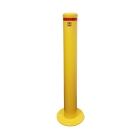
Bollards are short vertical posts used to block or restrict vehicle access without obstructing pedestrian movement. They’re a simple, effective way to protect assets and ensure that vehicles stay where they’re supposed to.
Best for:
- Preventing unauthorised vehicle entry
- Protecting assets and infrastructure
- Allowing pedestrian movement and visibility
- Enabling occasional vehicle access (with removable bollards)
Typical locations:
- Car park entrances
- Public squares and shared zones
- Building frontages and roller doors
- Paths in parks or school grounds
- Outdoor dining areas
Product tip:
Area Safe’s removable bollards are ideal for locations that require flexible access, such as event spaces, laneways, or restricted car parks. For areas exposed to weather, choose stainless steel or powder-coated finishes to resist corrosion and reduce maintenance.
One of our customers, Macquarie College needed to improve safety and flow in their student drop-off area. Our stainless steel bollards were the ideal solution, clearly defining vehicle boundaries while maintaining a clean, modern look.
Barriers: Heavy-Duty Protection Against Vehicle Impact
Barriers are robust horizontal structures, often made from steel, designed to stop or deflect vehicles. >span class="NormalTextRun SCXW179078961 BCX0"> used in environments where impact protection is critical, helping prevent collisions and creating a clear physical boundary between zones.
- Best for:
- Separating vehicle and pedestrian zones
- Protecting pedestrians from moving vehicles
- Preventing falls at loading docks or elevated areas
- Withstanding forklift or vehicle impact in industrial areas
Typical locations:
- Warehouses and distribution centres
- Loading docks
- Industrial estates
- School and council car parks
- Perimeters of high-traffic spaces
Product tip:
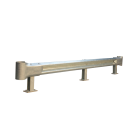
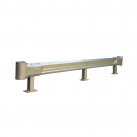
Our W Beam Guard System offers a fast and simple installation method, with handles built into the posts for easy carrying. It’s designed for one-person setup, saving time and labour on site.
Our W Beam Guard System was part of the solution for our DGL Manufacturing project, who approached Area Safe to help improve their loading dock safety.
Pedestrian Rails: Guiding People Safely Through Public Spaces
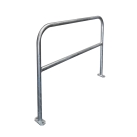
Pedestrian rails are continuous handrail or guardrail systems that guide foot traffic and help prevent pedestrians from straying into vehicle or hazardous zones. They offer subtle but effective control in busy or shared spaces and support accessibility requirements.
Best for:
- Keeping pedestrians on safe paths
- Complying with DDA requirements around ramps and crossings
- Creating subtle but effective visual cues
- Preventing foot traffic from entering vehicle zones
Typical locations:
- Schools and early learning centres
- Pedestrian crossings
- Pathways near busy roads
- Council parks and bus stops
- Car parks and commercial centres
Product tip:
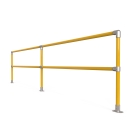
Our Modular Pedestrian Rail Kits are available in galvanised, yellow, or black finishes, making them easy to match to your site. The modular format means you can build to the exact length required, or adjust in future as needs change.
We recently supplied our pedestrian rail kit to ABC Tissues to separate heavy vehicle zones in a busy industrial setting.
How to Choose the Right Solution
When deciding between bollards, barriers, and pedestrian rails, ask yourself:
- What are you trying to stop or guide? (Cars, pedestrians, forklifts?)
- Is impact resistance a factor?
- Do you need visual openness or a physical block?
- Will emergency or service vehicles need temporary access?
- Is the site in a coastal or corrosive environment?
Getting this right from the start can help avoid costly retrofits or maintenance down the track.
Area Safe has years of experience supplying councils, schools, builders, and facility managers with reliable, Australian-compliant solutions. Whether you’re looking to control traffic, protect people, or create safe shared zones, we’re here to help. Contact us today via www.areasafe.com.au.
