
 Speed of Service
 Easy Systems
 Product Designers & Developers
 Car Park Protection





 Industrial Safety



 Pedestrian Barriers


 Matting, Ramps & Tactiles

 Signage & Safety



 Urban Furniture
Does My Workplace Need an Eyewash Station?
Having the right first aid equipment ready can make a significant difference when a workplace incident occurs, particularly when someone needs to flush a harmful substance from their eyes. Customers often ask us: “Do we need an eyewash station in our workplace, or is a first aid kit enough?”
The answer depends on your workplace hazards. Where hazardous chemicals or infectious substances could cause eye injuries, suitable emergency eyewash equipment should be provided.
Not every workplace needs a fixed station, but the equipment you choose must suit the potential exposure.
When Is an Eyewash Station Needed?
Australian workplace safety requirements place a duty on employers to provide appropriate first aid equipment and facilities. What you need depends on the work, hazards, workplace layout and people who may be exposed.
Activities that may require an eyewash or include handling or mixing chemicals, cleaning with concentrated products, battery maintenance and laboratory work.
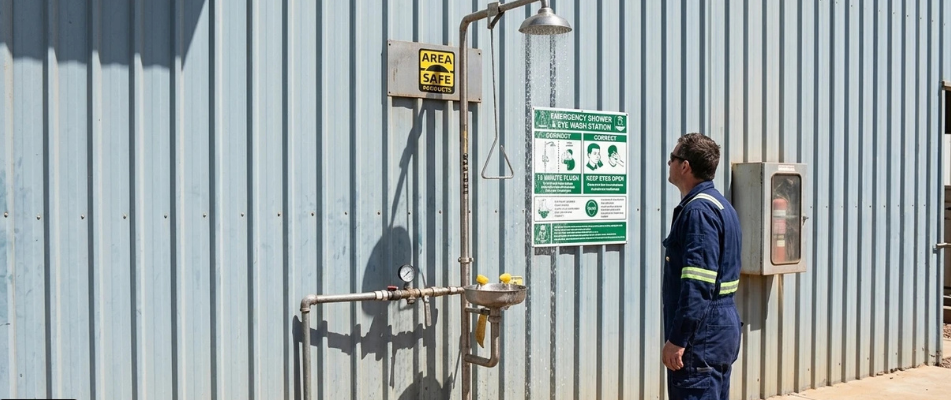
Start by reviewing the Safety Data Sheets (SDS) for your chemicals, particularly their first aid and exposure-control instructions. Then assess how substances are used, the likelihood of splashes and the consequences of exposure. This helps determine whether you need an eyewash, an eye-and-face wash, or a combined emergency shower and eyewash.
Are Eyewash Bottles Enough?
Small eyewash bottles can help someone begin flushing immediately, but they should not replace a primary eyewash station where sustained flushing is required.
Primary equipment should deliver at least 15 minutes of continuous flushing, operating without the user having to hold the valve open. This leaves both hands free to hold their eyelids open.
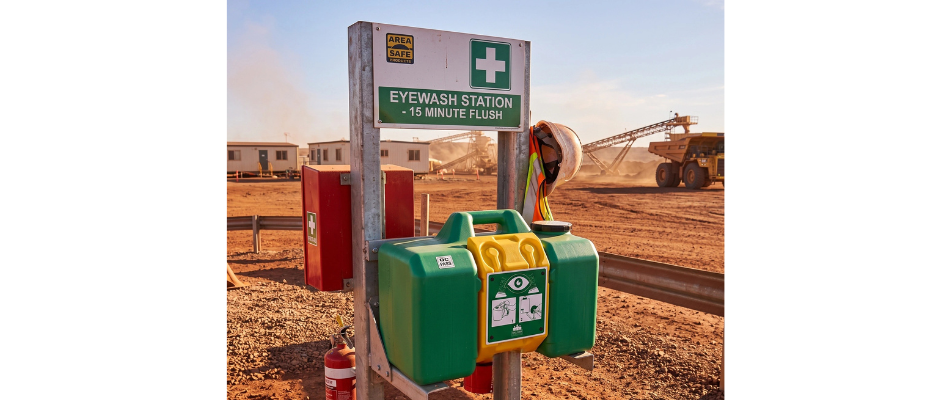
Where plumbing is unavailable, a suitably sized self-contained unit may be appropriate. For example, Area Safe’s Gravity-Fed Emergency Eyewash Station provides a 15-minute continuous flow from its own tank.
Where Should It Be Located?
The relevant equipment standard is AS 4775—Emergency eyewash and shower equipment.
Emergency equipment should generally be reachable within 10 seconds, along a clear, unobstructed route. Highly corrosive chemicals may require equipment immediately beside the work area. Workers should know its location and how to operate it.
A station behind stored materials or a locked door will not provide the rapid access needed in an emergency.
What Maintenance and Checks Are Needed?
Installing a station is only the beginning. It needs regular checks to ensure it will work when needed.
- Plumbed stations: Generally activate weekly, long enough to verify operation and flush the supply line. Check outlets, protective covers, leaks and unobstructed access.
- Self-contained portable units: Check fluid level, condition and any pressure requirements. Clean and replace fluid according to the manufacturer’s instructions, and restore capacity after testing or use.
- Primary eyewash equipment: Arrange an annual inspection against AS 4775, including applicable flow, spray pattern, activation and installation requirements.
Assign responsibility and keep a simple log recording the date, checker, faults and corrective action. Address faults promptly and ensure suitable emergency flushing remains available while repairs are completed.
Choosing Equipment for Your Workplace
Confirm your hazards and emergency requirements before selecting equipment. A wall-mounted eye-and-face wash or combined safety shower and eyewash may suit different exposure risks.
Eyewash equipment supports your emergency response. Safe handling procedures and appropriate eye protection are still essential to prevent exposure in the first place.
Need help choosing an eyewash station or emergency shower? Contact the Area Safe team via www.areasafe.com.au for guidance on product options and the maintenance instructions for your selected equipment.
