

 Speed of Service
 Easy Systems
 Product Designers & Developers
 Car Park Protection










 Industrial Safety











 Pedestrian Barriers



 Matting, Ramps & Tactiles




 Signage & Safety











 Urban Furniture
EV Charging Bays Need More Than Just Chargers
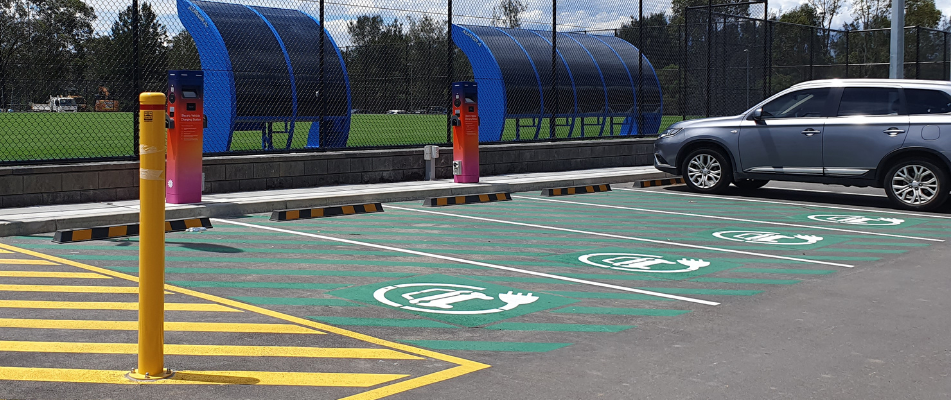
Electric vehicle charging infrastructure is rolling out rapidly across Australia. Shopping centres, commercial buildings, workplaces and public facilities are all upgrading car parks to support the growing number of EV drivers.
The electrical side of these projects gets a lot of attention. Power supply, charging speeds, cable management and compliance are usually front of mind.
The physical protection around EV charging bays is often overlooked until something gets damaged.
That is becoming a bigger issue as more EV charging bays are installed across Australia.
EV Charging Infrastructure Is No Longer Optional
The 2025 National Construction Code (NCC) now requires EV charging infrastructure in many new commercial developments and major building upgrades. At the same time, EV adoption across Australia continues to accelerate, with more than 100,000 EVs sold nationally during 2024 alone.
Public charging infrastructure is also expanding rapidly, with charging locations increasing significantly year on year as shopping centres, councils and commercial operators respond to demand.
Major retail centres including Chadstone and Westfield locations are already upgrading car parks and expanding EV charging capacity.
That means one thing for facilities managers, builders and car park operators: There are going to be a lot more EV charging bays needing protection.
The Problem Most Projects Miss
An EV charger is a significant investment. Depending on the charger type and installation complexity, replacement or repair costs can quickly become expensive.
Unfortunately, EV chargers are often installed in exactly the kind of environments where accidental vehicle impact is likely:
- Reversing vehicles
- Tight parking bays
- High-traffic commercial car parks
- Delivery and service vehicle areas
- Public parking environments with unfamiliar drivers
A simple low-speed impact can damage charging equipment, mounting structures, cables or surrounding infrastructure.
In many cases, relatively simple protection measures can prevent the problem entirely.
Wheel Stops Protect The Charger Position
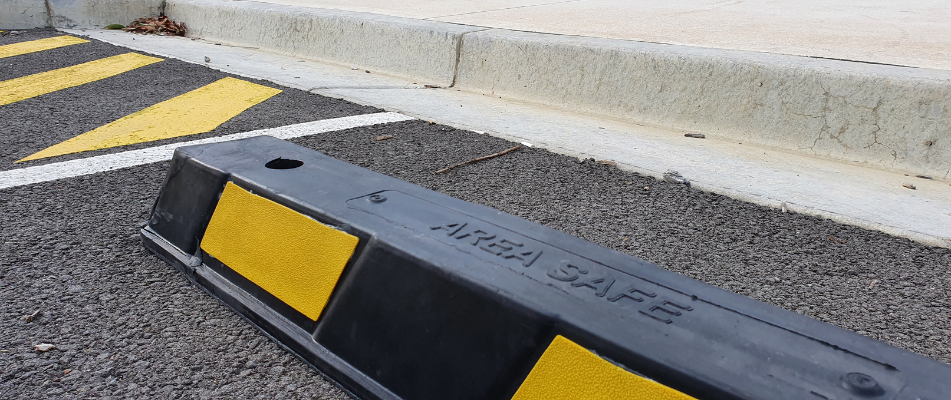
Wheel stops are one of the simplest and most effective ways to reduce the risk of vehicle contact with EV charging infrastructure.
By controlling how far a vehicle can travel into the bay, wheel stops help maintain safe clearance between the vehicle and the charging equipment.
This is particularly important where chargers are mounted:
- On walls
- Near pedestrian paths
- Adjacent to structural columns
- At the front of parking bays
Rubber wheel stops are commonly used because they are highly visible, easy to install and suitable for both indoor and outdoor car parks.
Bollards Protect Charging Equipment
Where chargers are exposed to higher impact risk, bollards provide direct protection for the charging unit itself.
Safety bollards are commonly installed:
- In front of charging pedestals
- Around standalone charging units
- Adjacent to pedestrian zones
- Near building walls and columns
The right bollard layout helps absorb accidental impact before the charger equipment is struck.
This is especially important in public car parks where drivers may be unfamiliar with EV bay layouts or distracted while maneuvering.
Barriers Help Separate Vehicles and Pedestrians
In larger charging areas or commercial facilities, barriers can also play an important role in separating traffic movement from pedestrian access zones.
This is particularly relevant in:
- Shopping centres
- Basement car parks
- Fleet charging areas
- Commercial and industrial facilities
- Mixed-use developments
Barrier systems can help define charging zones, guide vehicle movement and protect surrounding infrastructure from accidental impact.
Physical Protection Should Be Planned Early
One of the most common mistakes in EV charger projects is treating physical protection as an afterthought.
The charger gets selected. The electrical design gets completed. The installation gets scheduled.
Then someone realises the charging equipment is exposed to vehicle impact.
Planning wheel stops, bollards and barriers early in the project helps avoid rushed retrofits and better protects the long-term investment in charging infrastructure.
As EV infrastructure becomes standard across Australian commercial developments, physical protection around charging bays will become increasingly important.
Area Safe supplies a wide range of products suitable for EV charging bay protection, all available online and ready for fast delivery Australia-wide.
