.png)

 Speed of Service
 Easy Systems
 Product Designers & Developers
 Car Park Protection







 Industrial Safety





 Pedestrian Barriers



 Matting, Ramps & Tactiles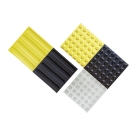


 Signage & Safety






 Urban Furniture
Why Tactile Indicators Matter: Ensuring Safety for the Visually Impaired in Public Spaces

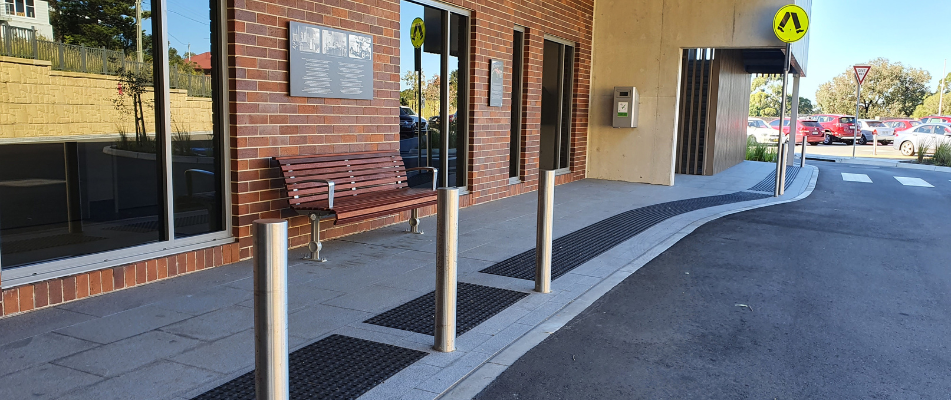
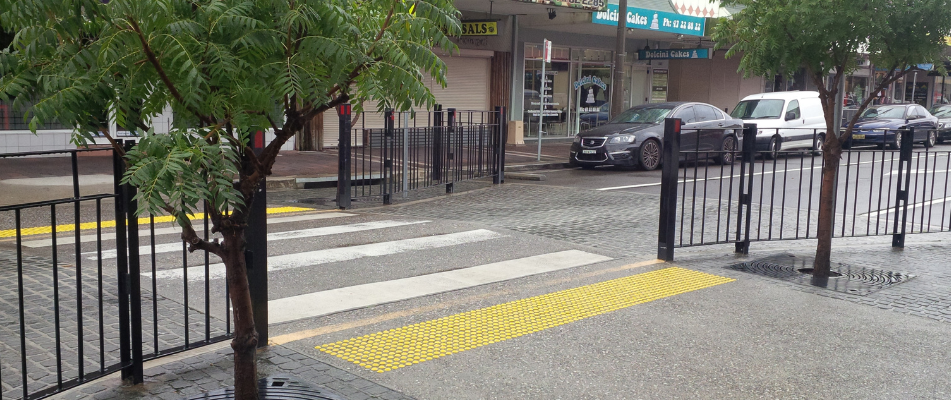
Navigating through public spaces can be challenging for anyone, but for people with impaired vision, the risks are even more significant. Tactile indicators are vital tools that help visually impaired individuals move safely and independently. These raised surfaces, often seen at the edges of train platforms, street crossings, and staircases, play a critical role in public place safety, ensuring accessibility for everyone.
In this blog, we'll discuss why tactile indicators matter, how they improve occupational safety, and why they should be implemented in all public spaces. So, let's start!
What Are Tactile Indicators?
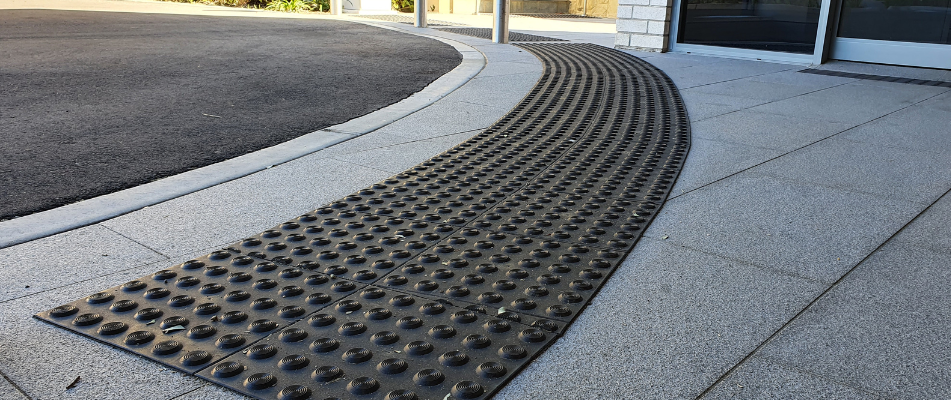
Tactile indicators are specially designed ground surfaces that provide guidance or warning to visually impaired individuals. These are typically small, raised bumps or ridges installed on footpaths, stairs, or near hazards like platforms and road crossings. This way, visually impaired pedestrians receive crucial sensory information about their surroundings.
Why Tactile Indicators Matter?
Tactile indicators play an indispensable role in making public spaces accessible and safe for visually impaired individuals. Without them, everyday tasks like crossing the street or navigating stairs could become perilous. Here's why they matter:
1. Enhanced Mobility and Independence
Tactile indicators empower visually impaired individuals by giving them the tools to navigate public spaces with confidence. The raised textures provide essential information about potential hazards and guide pedestrians to follow safe paths. This enhances their mobility and independence, allowing them to access public areas such as parks, transit stations, and building interiors.
2. Compliance with Accessibility Standards
In Australia, tactile indicators must comply with specific standards to ensure consistency and effectiveness. The Australian/New Zealand Standard ™ outlines the requirements for the design, placement, and installation of tactile ground surface indicators.
This ensures that tactile indicators are properly placed in high-traffic areas such as stairways, ramps, and escalators, ensuring optimal access and mobility for visually impaired individuals.
3. Meeting Legal Requirements for Public Spaces
Public and private entities must adhere to these standards when constructing or renovating spaces. Failure to comply with AS/NZS 1428.4.1:2009 can result in fines and legal penalties, but more importantly, it can lead to unsafe conditions for visually impaired individuals. This allows businesses and governments to demonstrate their commitment to public place safety and equal access for all.
4. Adhering to Slip Resistance Standards
Slip resistance is a critical factor when installing tactile indicators, especially in outdoor or wet environments. The AS 4586:2013 standard outlines the slip resistance requirements for tactile indicators, ensuring that they provide secure footing even in adverse conditions. Materials such as stainless steel, polymer composites, and slip-resistant metals are commonly used to meet these strict guidelines.
5. Improved Public Place Safety
Safety is a major concern in high-traffic areas, and tactile indicators significantly reduce the risk of accidents. Warning indicators at the edges of platforms or staircases alert individuals to potential dangers, helping to prevent missteps or falls. Often installed along pedestrian walkways, Guidance indicators help users stay on a safe path. Since they offer both directional guidance and hazard alerts, tactile indicators improve overall public place safety.
The Role of Tactile Indicators in Occupational Safety
Tactile indicators aren't just essential for general public safety; they also contribute to occupational safety. Workers in high-risk environments, such as construction sites or transportation hubs, can rely on these indicators to ensure safe navigation. Compliance with tactile safety measures also ensures that businesses meet legal obligations for worker protection, reducing the likelihood of workplace accidents.
Tactile indicators must provide reliable traction for visually impaired pedestrians, even in rain or snow. Without adequate slip resistance, tactile indicators can become a hazard instead of a safety feature. Compliance with AS 4586:2013 ensures that tactile surfaces remain safe and functional in all weather conditions.
How Tactile Indicators Improve Public Place Safety?
Tactile indicators contribute significantly to the safety of public spaces, particularly for those living with blindness or vision impairments. Let's explore how they enhance public safety:
1. Hazard Awareness Through Tactile Cues
Tactile warning systems are strategically placed to alert individuals about potential dangers. For example, truncated domes near train platforms or staircases provide a sensory alert to stop and be cautious. These raised surfaces are easily distinguishable from the surrounding ground, making them an effective tool for hazard prevention.
2. Directional Guidance for Safe Navigation
In addition to warning about hazards, tactile indicators provide guidance through flat-topped bars. These indicators direct pedestrians along safe paths, reducing the risk of wandering into dangerous areas. In high-traffic locations such as transit stations or shopping centres, this guidance is invaluable for maintaining a smooth and safe flow of foot traffic.
3. Consistency and Standardisation in Public Spaces
A key aspect of tactile indicators is their consistency across different public spaces. Tactile indicators should be installed and designed in the same way, making them easily recognisable and interpretable for visually impaired individuals.
The consistent use of tactile warning systems like truncated domes and guidance bars ensures that visually impaired individuals can navigate any public space with confidence. The standardised design allows for easy recognition and interpretation of tactile cues, no matter where a person is located. This uniformity enhances accessibility nationwide.
4. Versatility of Tactile Indicators in Design
While tactile indicators follow specific standards, they can still be customised to fit different environments and aesthetic preferences. Available in a variety of materials, sizes, and colours, tactile indicators can be designed to blend seamlessly with their surroundings while maintaining their functionality.
5. Material Choices and Durability
Common materials for tactile indicators include stainless steel, ceramic, and polymer composites. These materials are chosen for their durability, slip resistance, and ability to withstand the wear and tear of high-traffic areas. Stainless steel, in particular, is popular for its sleek design and longevity, making it ideal for outdoor installations.
Challenges in Implementing Tactile Indicators
Despite the clear benefits of tactile indicators, implementing them in public spaces can sometimes be challenging. Issues such as cost, aesthetics, and compliance with building regulations can create barriers to their widespread adoption.
One of the main concerns with tactile indicators is that they may disrupt the visual appeal of certain public spaces. However, with the wide range of design options available, it's possible to integrate tactile indicators that complement the surroundings without sacrificing functionality.
To Wrap Up
Tactile indicators are essential for ensuring the safety and independence of visually impaired individuals in public spaces. By providing clear, non-visual cues about potential hazards and safe paths, they enable people to navigate with confidence and ease.
Adhering to accessibility standards like AS/NZS 1428.4.1:2009 and AS 4586:2013 is crucial in creating inclusive, safe environments for all. If you wish to adhere to these standards, consider getting in touch with Area Safe, one of the best street furniture companies in all of Australia!
